WTO Doha: Information Regarding the 4th WTO Ministerial Conference.
Following the decision of the General Council of the WTO on February 2001 to designate Doha-Qatar as the venue for the 4th WTO Ministerial Conference, the Qatari Government established an Organizing Committee with a view to oversee the logistical and other preparatory aspects of the Ministerial Conference. This was its website.
Organizing Committee
The Organizing Committee has twelve members. It is headed by the Ministry of Finance, Economy and Commerce and has representatives from other ministries and state bodies that are either directly related to the preparation process or with first hand experience in organizing previous successful conferences in Doha.
The Committee established 9 task forces, each dealing with a particular aspect of the Ministerial Conference.
The 9 task forces are the following:
- Task Force for protocols
- Task Force for transportation and accommodation
- Task Force for media affairs
- Task Force for security affairs
- Task Force for medical affairs
- Task Force for logistics and meetings support
- Task Force for coordination with the WTO
- Task Force for telecom
- Task Force for financial affairs
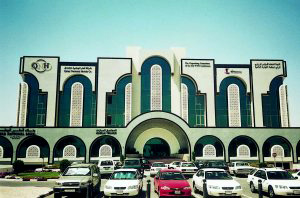
The Organizing Committee since its inception, has been coordinating closely, and will continue to do so, with the WTO secretariat and members to ensure that the preparations in the run-up to the WTO 4th Ministerial Conference are conducted in a smooth, fair and transparent manner.
The Organizing Committee, the members of the task forces and their secretariat remain committed to the common objective of turning the 4th Ministerial Conference into a successful and historical event for Doha and the world.
We look forward to seeing you in Doha during the 4th Ministerial Conference.
The Organizing Committee
P.O. Box 22240
Doha - State of Qatar
Fax : + 974 4 830 923
WELCOME TO QATAR
Welcome to the land of mystery and surprises! Qatar has so much to offer. Enjoying some of the tours, safaris and excursions is virtually a must. Not only is there much to see, but there is much to learn and understand well. A vibrant combination of old and new greets the visitor, and a half-day guided tour through the souqs (old markets), provides a fascinating insight into the local culture. Overnight safaries into the desert combine sand, sun and first-hand experience of the traditional Arabic lifestyle. Virtually no aspect to life in Qatar is left to the guidance on all aspects of culture, adventure and exploration. Come - and see the difference!
Hotels
Sheraton Doha HOTEL & RESORT
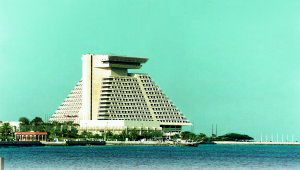
Waterfront setting on the north promontory of Doha Bay, adjacent to the capital city's newest commercial district. Close to the Diplomatic Area, Qatar International Exhibition Centre, Khalifa International Tennis & Squash Complex and Doha Golf Club. Less than a 15 minute drive from Doha International Airport and the centre of the city. Set in 70 acres of landscaped gardens.
Accommodation:
370 rooms including 65 suites. 24 hour room service. All rooms have individual temperature control, radio, color TV with in-house movie channel, Cable TV, private balcony, mini fridge, IDD Telephone, voice mail and separate comfortable seating arrangements.
305 Standard & Executive rooms, including 47 non-smoking rooms. 32 Junior Suites, 10 Executive, 7 Diplomatic, 4 Penthouse, 5 Presidential, 2 Royal and 5 Head of State. All with panoramic sea view. Express check-in/out facilities on the Executive Club Floor, which has a private hospitality lounge and 24-hour butler service. New Towers Floors open in July 2001.
Corporate Facilities:
Full Service Business Centre; secretarial, fax, postal & courier services; Internet access; photocopying & binding facilities; computer hire; mobile phone rental.
The Conference Centre has state-of-the-art audio visual and recording facilities and can accommodate up to 5,000 delegates with options for simultaneous translation in seven different languages.
Doha Marriott Gulf Hotel
Location:
In landscaped gardens on the Eastern shores of Doha Bay, with a panoramic view of the city and the Gulf. Only five minutes away from Doha International Airport or the city centre. A fifteen minute drive from the new commercial district and the Qatar International Exhibition Centre and 25 minutes away from the Doha Golf Club.
Accommodation:
352 rooms, including 44 suites and 41 non-smoking rooms. Guests staying in the Executive Tower have use of the Executive Lounge and a complimentary healthy start breakfast in the morning. Individual Climate Control; Interactive TVs; built-in keyboard for WebTV browsing; In-House Pay Movies; Mini-bar; hairdryer; shavers; safes; 24-hour room service. Each of the Tower rooms has two telephone lines, making for ease of Internet access. Telephones have speed dial and speakerphones.
Corporate Facilities:
Two large ballrooms with state-of-the-art audio visual equipment provide seminar, meeting and entertainment facilities for up to 1,000 people. Business Centre offering full range of support services.
THE RITZ-CARLTON DOHA
Location:
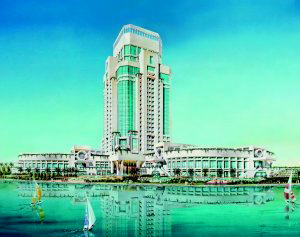
Situated in the prestigious West Bay Lagoon district, overlooking the crystal blue waters of the Arabian Gulf. Occupying two private Islands, the hotel is perfectly located 15 minutes from the centre of town, 25 minutes from Doha International airport; less than five minutes from the 18-hole championship course of Doha Golf Club, Close to Qatar University and the new road leading to al Khor and Ras Laffan industrial city.
Accommodation:
374 guest rooms including 61 suites and 42 Club Rooms.
Meeting and Banquet Facilities:
Over 21,528 square feet/2000 square meters of meeting, conference and banqueting facilities including the 12,421 square foot/1,154 square meter Al Amiriya Ballroom, 6080 square foot/565 square meter Al Shoyoukh Ballroom, six individual meeting rooms, dedicated teleconferencing room and extensive outdoor function space.
HOTEL INTER-CONTINENTAL DOHA
Location:
Opened in November 2000 and set in landscaped gardens on the beachfront in the West Bay Lagoon area of Doha, close to Aladdin's Kingdom Family Fun Park, Doha Golf Club, Qatar University, and the Diplomatic Area. A twenty minute drive from Doha International Airport and 10-15 minutes from the commercial area and city centre. It has easy access to the arterial roads linking Doha with the industrial cities of Mesaieed, Dukhan and Ras Laffan.
Accommodation:
A total of 268 rooms, including 36 suites, all with a sea view; several suites have kitchen facilities. 12 Business Rooms, 12 Executive Suites, 12 Diplomatic Suites, 10 Presidential Suites, 2 Royal Suites. A number of rooms have been designed specifically for guests with special needs. Each room has a private bathroom with a separate bath & shower. Hair dryer; bathrobe; radio; satellite TV and movies; IDD telephones; voicemail; Internet Access via television in all rooms; 24-hour room service. The Club Floor rooms have express check-in/out facilities; a private meeting room; executive lounge with complimentary breakfast, light refreshments. Internet access, and fax/scanner/colour printer/copier machines are available in all Club rooms.
Meeting and Banquet Facilities
Full business facilities include conference and meeting rooms. Al Wajba ballroom can cater for up to 1,000 guests theatre-style and can be sub-divided into three separate soundproofed rooms for smaller functions.
Al Diwan and Al Dana are spacious meeting rooms which can each seat 140 theatre-style or be sub-divided into two separate smaller soundproofed rooms. The smaller Barzan meeting room, with sea view, seats up to 50 theatre-style.
The well equipped Business Centre has Internet access, photocopying and fax machines, state-of-the-art computers and printers. Twelve rooms have been designed as ˜office-away-from-the-office' facilities for guests.
DESCRIPTIONS OF THE TOURS
DOHA CITY TOUR
Your visit to Qatar will undoubtedly begin in Doha, the Capital City and home to 80% of the country's population, most of its commerce and the heart and pulse of its culture. Our guided city tour, in an air-conditioned bus, takes you through the downtown streets, some evocative of days gone by, others reflecting the dramatic and stunning modernization of this fast-growing city. Beginning at the Qatar National Museum, you will enjoy a fascinating glimpse into the history and marine life of this unique country.
Strolling along the sea-front Corniche you will be struck by the expanding and rising urban skyline on the one side, whilst on the other traditional dhows, still used for fishing, trade and leisure, line the quays.
Later, there will be a chance to view a private collection of the region's oldest weapons-swords, daggers, pistols and cannons - in the Weaponry Museum.
No tour of the city would be complete without a visit to the traditional vegetable and fish markets, the falconry shops and the colorful Old Souq. Here, the exotic small of the coffee beans, spices, ancient herbal remedies and Arabic perfumes fills the air.
Later, we move to the Gold Souq (market), where an array of jewelry in both Arabic and western styles are on offer at very attractive prices.
Finally, by contrast, we end our tour to one of the Middle East's largest shopping malls, the City Center, where there is a very high standard of international products such as perfumes, cosmetics, clothes, watches, bags etc.
DUNES DISCOVERY TOUR
A comfortable 4-wheel drive vehicle will take you from Doha, south along the coastal route to the Sea line Beach Resort, where you vehicle will be prepared for the exciting journey ahead. Air will be released from the tires to enable them to drive smoothly over the soft sand of the magnificent dunes that lie ahead.
This tour is an ideal photo opportunity, allowing you to capture the stunning panoramic views of spectacular sand dunes and the Inland Sea, whilst enjoying the excitement of a roller-coaster ride. This is truly a chance to enjoy the unspoiled nature of the desert and experience the unique scenery.
CAMEL TRACK & EQUESTRIAN CLUB
Those who long to take a look at the ubiquitous camel in its natural surroundings will not have far to look at Shahaniya, a desert area some 25km from Qatar's capital city Doha. Here, alongside the purpose-built camel race track, hundreds of camels, their trainers and riders, live and work all year round, giving the tourist an opportunity for a unique insight into this traditional Arabic sport. Experts are on hand to explain all aspects of camel training and racing.
Whilst the camel is perhaps the best-known inhabitant of the desert, there is an other animal, which commands equal respect amongst the Arab people - the horse! A short journey from Shahaniya is the Equestrian Club, where visitors will be welcome to view some of the country's finest horses.
DESERT SAFARI
This afternoon and evening tour in comfortable 4-wheel vehicle, takes you some 75km across the southern Qatari desert, with over half of this distance off-road. Our highly experienced drivers will take you on an exciting and unforgettable roller-coaster ride over the magnificent sand dunes - some as high as 50 meters! You will venture as far as the famous Inland Sea - an area renowned for its outstanding beauty, where you can relax, Bedouin Style, complete with tent, carpets and cushions and our famous Arabic hospitality. Take a swim in the tranquil Gulf waters or scramble up the sand on foot. Experience the quiet of the desert, far from the rush and noise of city life, with no sound but the breeze and the shifting sand. Or, for the more adventurous, try sand boarding or sand skiing - a cinch for those experienced on snow, and a soft landing for those who are trying it for the first time! As evening approaches, enjoy sunsets as the beat of the drums and rhythmic music of the region echo into the night. Return to your hotel by late evening.
I went on several of the offered tours while attending the Fourth Ministerial Conference of the WTO. My favorites were the Dunes Discovery Tour and the Desert Safari. I caused quite the stir each time when I put on one of my favorite Batman hoodies when the sun dropped behind the horizon and the temperature dropped with it. The first time I wore a Batman t-shirt I had people coming up to me asking where they could get one like it. I would give then the website url where I bought them. I ended up giving away two Batman t-shirts to a guide on each of the tours as a "gratuity" for all their help. I think they appreciated the Batman t-shirts more than the money they received from other guests. When I returned to the US I ordered the same styles again since those two were favorites. It makes me smile to imagine those two young men, one wearing a Batman the Animated Series t-shirt with the masked man leaping off a red disc against a black t-shirt, his cape flying out behind him, and the other with a Batman Lightning Strikes t-shirt and being the envy of their friends.
QATAR GENERAL INFORMATION
Capital |
Doha |
|
Commercial |
Doha |
|
Time |
GMT+3hrs |
|
Language |
Arabic, with English widely spoken |
|
Electricity |
240 volts |
|
Int'l Dailing Code |
+974 |
|
Climate |
From June to September the climate is hot with high levels of humidity during the mounths of July and Audust. Temperatures can reach the mid-40's with no rainfall during these months. |
|
Tourist Visa |
All visitors to Qatar are required to hold a valid visa, except Nationals and Residents of Bahrain, Kuwait, Oman, Saudi Arabia and United Arab Emirates. A two-week Tourist Visa can be obtained through any Doha hotel, but must be arranged at least one week in advance of arrival. |
|
Taxi |
Taxis are not expensive and readily available. However, for privacy and comfort, the use of a limousine is recommended and can be arranged by contacting you hotel reception. |
|
Currently |
Qatar Riyal (QR=100Dirhams) |
More Background On WTODoha.org
WTODoha.org is a surviving piece of early-2000s diplomatic and internet history. Created in connection with the Fourth Ministerial Conference of the World Trade Organization, the website served as an information resource for one of the most consequential international trade meetings of the early twenty-first century.
The conference took place in Doha, Qatar, from November 9–14, 2001, bringing together WTO members at a particularly sensitive moment in international affairs. The meeting formally launched what became known as the Doha Development Agenda, or Doha Round, a sweeping program of trade negotiations intended in significant part to address the concerns and economic prospects of developing countries.
WTODoha.org was not simply a website explaining WTO policy. Its original role was considerably more practical. The Qatari government established an organizing committee to oversee logistical and preparatory work for the ministerial conference, and WTODoha.org was the committee's website. The site provided information about the organizing structure, hotels, conference facilities, transportation, Qatar, sightseeing and other matters that delegates and visitors needed to know.
Today, that combination gives WTODoha.org an unusual historical value. It preserves a view not merely of what governments negotiated in Doha, but of how Qatar presented itself to the thousands of international officials, journalists, NGO representatives and other visitors arriving for a landmark global meeting.
Why the Fourth WTO Ministerial Conference Mattered
The World Trade Organization came into existence in 1995, replacing the General Agreement on Tariffs and Trade institutional framework with a permanent international organization governing a broad range of international trade agreements.
Its Ministerial Conference is its highest-level decision-making body and is required to meet at least once every two years. Doha followed WTO ministerials in Singapore in 1996, Geneva in 1998 and Seattle in 1999.
Seattle made the next conference particularly important.
The 1999 Seattle Ministerial had ended without agreement on launching a new round of multilateral negotiations and had become internationally famous for mass demonstrations and clashes between protesters and police. WTO officials subsequently spent roughly two years trying to rebuild confidence among members and resolve disagreements that had prevented a consensus in Seattle.
Preparations for the Doha meeting therefore extended far beyond arrangements for hotels and meeting rooms. WTO members had to determine whether sufficient agreement existed to begin another broad negotiating round.
In January 2001, Qatar offered to host the Fourth Ministerial Conference. The WTO General Council accepted Qatar's offer, and organizational and substantive preparations proceeded during the year.
That decision ultimately put Doha's name permanently into the vocabulary of international trade.
Who Owned and Operated WTODoha.org?
WTODoha.org was associated with the Qatari government's organization of the Fourth WTO Ministerial Conference rather than being the principal website of the WTO itself.
According to the surviving site's description, after Doha was selected as the host city, the Qatari government created an Organizing Committee to oversee logistical and other preparations. The committee consisted of 12 members and was headed by Qatar's Ministry of Finance, Economy and Commerce, with representatives from other ministries and state bodies involved in conference preparations.
The committee divided the enormous organizational undertaking among nine specialized task forces covering protocol, transportation and accommodation, media affairs, security, medical affairs, logistics and meeting support, coordination with the WTO, telecommunications and financial affairs.
The surviving material lists the Organizing Committee's address as P.O. Box 22240, Doha, State of Qatar.
That structure illustrates the scale of the operation. Hosting a WTO ministerial required much more than supplying a conference hall. Qatar had to coordinate diplomatic protocol, international media, telecommunications, security, hotels, transportation, medical support and the requirements of the WTO Secretariat and national delegations.
WTODoha.org as a Practical Visitor Guide
One of the most interesting characteristics of WTODoha.org is how much of the site was devoted to the experience of actually visiting Qatar.
The content combined official conference information with something resembling a destination guide.
Visitors were introduced to Qatar as a place where traditional culture and rapid modernization existed alongside one another. The site encouraged delegates and other visitors to explore markets, cultural attractions and the desert rather than simply travel between their hotels and conference meetings.
This makes WTODoha.org quite different from today's institutional conference websites, which frequently concentrate on schedules, registration systems, downloadable documents and streaming video.
The Doha site reflected an earlier internet era in which an event website could simultaneously function as an organizational directory, accommodation guide, tourism brochure and practical handbook.
Hotels and Conference Infrastructure
Accommodation was obviously a major concern for an international gathering of this scale, and WTODoha.org supplied extensive descriptions of Doha's leading hotels.
Among the properties described were the Sheraton Doha Hotel & Resort, Doha Marriott Gulf Hotel, Ritz-Carlton Doha and Hotel Inter-Continental Doha.
The descriptions reveal something about Doha's development at the beginning of the twenty-first century.
The Sheraton was presented as occupying a waterfront location on Doha Bay near the diplomatic and commercial districts. Its conference center was described as capable of accommodating as many as 5,000 delegates and providing simultaneous interpretation in seven languages.
The Doha Marriott Gulf Hotel offered 352 rooms, including 44 suites, while the Ritz-Carlton Doha offered 374 guest rooms and more than 21,000 square feet of meeting, conference and banquet facilities. The Inter-Continental, which had opened only in November 2000, offered 268 rooms and extensive meeting facilities.
These hotel profiles are now useful historical records in their own right. Doha has undergone enormous development since 2001, so descriptions of West Bay, Doha Bay, the diplomatic district and the city's hotel infrastructure provide a snapshot of the capital before the dramatic expansion associated with later decades.
Location and Proximity
Geography received considerable attention because international attendees needed to understand how hotels related to the airport, conference facilities, diplomatic areas and commercial districts.
For example, WTODoha.org described the Sheraton as less than a 15-minute drive from both Doha International Airport and the city center. The Marriott was presented as approximately five minutes from the airport or city center, while the Ritz-Carlton was described as roughly 15 minutes from central Doha and 25 minutes from the airport.
These references concern the former Doha International Airport, not today's Hamad International Airport, which opened years later.
The location descriptions also mention landmarks such as Qatar University, Doha Golf Club, Qatar International Exhibition Centre and the Khalifa International Tennis & Squash Complex.
For modern readers, these details help reconstruct Doha's urban geography at the time of the conference.
Touring Doha and Qatar
WTODoha.org went well beyond accommodation information by describing organized excursions available to conference visitors.
One was a Doha City Tour. It included the Qatar National Museum, Corniche, traditional markets, falconry shops, the Old Souq and Gold Souq before concluding with the strikingly modern contrast of the City Center shopping mall.
The itinerary captured the image Qatar wanted international visitors to encounter: a society preserving Arab and Gulf traditions while rapidly developing into a modern commercial center.
Another option, the Dunes Discovery Tour, took visitors south from Doha toward the desert and Inland Sea. Four-wheel-drive vehicles had their tire pressure lowered before traveling over the dunes.
The Desert Safari offered a longer experience involving approximately 75 kilometers of travel across southern Qatar, including substantial off-road driving. The site's description mentioned dunes reaching approximately 50 meters, swimming in Gulf waters, traditional hospitality, sandboarding and sunset in the desert.
Another excursion took visitors to the camel racing area at Shahaniya, approximately 25 kilometers from Doha, followed by a visit to an equestrian facility.
These sections demonstrate that WTODoha.org had a secondary mission: using an international political and economic event to introduce Qatar itself to an influential global audience.
The Conference After September 11
The timing of the ministerial made the conference extraordinary.
The September 11, 2001 terrorist attacks occurred less than two months before delegates were due to arrive in Doha. International travel, security and diplomatic planning had suddenly become far more complicated.
Yet preparations continued.
By October 22, the WTO was publicly stating that the Doha Ministerial would go ahead, and Qatar and WTO officials continued coordinating arrangements. WTO news from the period reflects the shadow of September 11 over international economic diplomacy and the determination of officials to present cooperation as especially important during a period of uncertainty.
This context gave the Doha meeting significance beyond trade.
WTO Director-General Mike Moore argued at the opening that the world economy needed a signal of confidence in open markets and international cooperation. Qatar's Emir, Sheikh Hamad bin Khalifa Al-Thani, similarly framed a successful conference as evidence that nations could cooperate toward a more just world.
For Qatar, successfully hosting such a complex international gathering under those circumstances was itself a significant diplomatic achievement.
NGOs, Media and International Attention
The Doha conference attracted attention far outside government trade ministries.
Civil society organizations had become an especially visible part of the international debate surrounding the WTO following Seattle. For Doha, 673 organizations applied by the deadline to participate, and the WTO determined that 647 NGOs were eligible to attend. They represented organizations from around the world working across the range of subjects affected by WTO policy.
Media demand was also expected to be substantial. WTO officials reported during preparations that indications suggested media registration requests could exceed even the number coming from NGOs.
The audience for information surrounding the conference therefore extended far beyond trade negotiators. It included journalists, activists, development organizations, business groups, academics and advocacy organizations concerned about subjects ranging from agriculture and globalization to intellectual property and public health.
WTODoha.org occupied the logistical side of that information ecosystem.
The Doha Development Agenda
The enduring reason the 2001 conference remains historically important is the Doha Development Agenda.
WTO governments agreed in Doha to launch a broad new negotiating program covering approximately 20 areas of international trade. Development was placed prominently in the agenda, particularly the trading prospects and implementation problems of developing economies.
Subjects included agriculture, services, non-agricultural market access, intellectual property, subsidies, anti-dumping rules, regional trade agreements, dispute settlement, trade and the environment, electronic commerce, small economies, trade facilitation and other issues.
The original ambition was remarkable: governments hoped to reach agreement on almost all of the negotiations by January 1, 2005.
That did not happen.
The Doha Round became one of the longest-running and most difficult negotiating undertakings in modern international economic diplomacy. WTO members eventually achieved important individual agreements, including the Trade Facilitation Agreement concluded at the 2013 Bali Ministerial, but many Doha issues remained unresolved.
Consequently, the word "Doha" came to represent far more than the city in which the conference occurred.
The Doha Declaration on Public Health
One of the conference's most consequential achievements involved intellectual property and medicines.
Governments adopted the Declaration on the TRIPS Agreement and Public Health on November 14, 2001.
The declaration responded to concerns that international patent protections could interfere with developing countries' ability to provide affordable medicines, an especially urgent issue amid the HIV/AIDS, tuberculosis and malaria crises.
It affirmed that the TRIPS Agreement should not prevent WTO members from taking measures to protect public health and clarified governments' ability to use mechanisms such as compulsory licensing and other flexibilities.
The declaration subsequently became an important reference point in debates over intellectual property, pharmaceutical patents and access to medicines. The United Nations Development Programme has described its continuing importance to developing and least-developed countries seeking to expand treatment access.
That legacy gives the conference documented by WTODoha.org a social and humanitarian significance extending well beyond conventional tariff negotiations.
China and Chinese Taipei Join the WTO
Another major development in Doha was the expansion of WTO membership.
On November 10, ministers formally approved China's accession to the WTO. China subsequently became the organization's 143rd member on December 11, 2001.
Ministers also approved the accession of Chinese Taipei during the Doha conference.
China's entry was an enormous event in the evolution of the global trading system. It integrated one of the world's largest and fastest-growing economies more fully into WTO rules and would have profound consequences for manufacturing, supply chains, investment and trade patterns during the following decades.
Thus, while the site itself concentrated heavily on practical arrangements, the conference it supported coincided with a fundamental shift in the structure of global commerce.
Qatar's Larger Goal
WTODoha.org can also be understood as part of Qatar's emergence as a host for high-profile international events.
At the conference opening, Qatar's Emir explicitly noted that the meeting gave the country an opportunity to introduce itself and demonstrate the openness and flexibility of its economic system.
The tourism material on WTODoha.org reinforces that objective.
Visitors were shown beaches, hotels, desert landscapes, souqs, cultural attractions, sports facilities and a rapidly developing capital. Conference delegates were not treated simply as meeting participants; they were an international audience being introduced to Qatar.
Seen from the perspective of later decades—when Doha would host major diplomatic meetings, international sporting competitions and eventually the 2022 FIFA World Cup—the 2001 WTO conference looks like an important early milestone in Qatar's development as a globally recognizable event destination and diplomatic center.
Popularity and Contemporary Reach
Reliable conventional web-traffic measurements for WTODoha.org during 2001 are not readily available, so it would be misleading to assign the site a precise historical visitor count or popularity ranking.
Its potential audience, however, was substantial.
The Fourth Ministerial was the WTO's highest-level meeting, brought together its membership, attracted hundreds of eligible NGOs and generated intense international media attention. WTO officials themselves anticipated particularly heavy media demand.
WTODoha.org should therefore be viewed less as a mass-market consumer website than as a specialized official event resource serving an unusually influential international audience.
Its modern importance is different. Today, the domain is most valuable as a historical resource associated with a major event in the evolution of global trade.
Awards, Reviews and Reputation
There is no strong evidence in the surviving material or authoritative contemporary sources that WTODoha.org itself won major website awards, and it would be inappropriate to attribute awards to it without documentation.
Traditional consumer reviews are equally inapplicable. This was an event and logistical information site rather than a commercial attraction, hotel or consumer service.
Its reputation is better evaluated through the event it represented.
The conference was regarded by WTO leadership as a major success because members reached agreement after the breakdown in Seattle. The December 2001 edition of WTO Focus reported that ministers approved what they characterized as a broad and balanced work program. Conference chairman Youssef Hussain Kamal emphasized the importance of achieving an agreement during a difficult period of international uncertainty.
That successful outcome gave both Doha and Qatar considerable international exposure.
A Snapshot of Qatar in 2001
The website also preserves small details that make it valuable as a historical document.
Its general information identified Arabic as the principal language while noting that English was widely spoken, listed the international dialing code as +974, described the currency as the Qatar riyal and supplied practical information about climate, visas and taxis.
Such information was ordinary travel guidance in 2001.
More than two decades later, however, it provides a time capsule of how Qatar described itself to first-time international visitors before its extraordinary subsequent development.
The same is true of references to hotel internet access, WebTV browsing, fax facilities, mobile-phone rental, voicemail and business centers. These were selling points for international business travelers at the beginning of the century. Today they document the technological expectations of an entirely different stage of the internet age.
Cultural and Historical Significance of WTODoha.org
WTODoha.org matters because several historical narratives intersect in one website.
It represents an early stage of Qatar's rise as an international diplomatic and event center. It documents the practical machinery behind a major multinational summit. It captures Doha at a transitional point in its physical development. And most importantly, it is connected to a conference whose name remains embedded in international economic history.
The Doha Development Agenda, the TRIPS and Public Health Declaration, China's WTO accession and the attempt to rebuild multilateral trade cooperation after Seattle all converged in Doha in November 2001.
The conference was also held only weeks after September 11, giving the gathering an additional symbolic dimension. International officials explicitly presented cooperation and a successful outcome as signs of confidence at a moment of unusual global uncertainty.
WTODoha.org consequently deserves to be viewed as more than an obsolete conference website.
Its hotel descriptions, transportation details, tourism recommendations and organizational information preserve the physical reality surrounding negotiations normally remembered through declarations and policy documents. The official WTO archive tells us what governments negotiated and decided. WTODoha.org helps show where delegates stayed, what facilities supported them, what they were encouraged to see and how the host country wanted itself to be understood.
That is what makes the site especially interesting today.
It is both a record of a conference and a snapshot of Qatar just before Doha became one of the world's most recognizable names in diplomacy, international sport and global economic affairs.